The Baptistery of Saint John – Battistero di San Giovanni
The Baptistery of Saint John stands opposite the Duomo (Florence Cathedral).
Address: Piazza del Duomo.
Opening hours: every day, 8:30–19:30. On the first Sunday of the month, 8:30–13:30.
Admission: access with the Brunelleschi Pass (€30), the Giotto Pass (€20) or the Ghiberti Pass (€15), valid for 3 days.
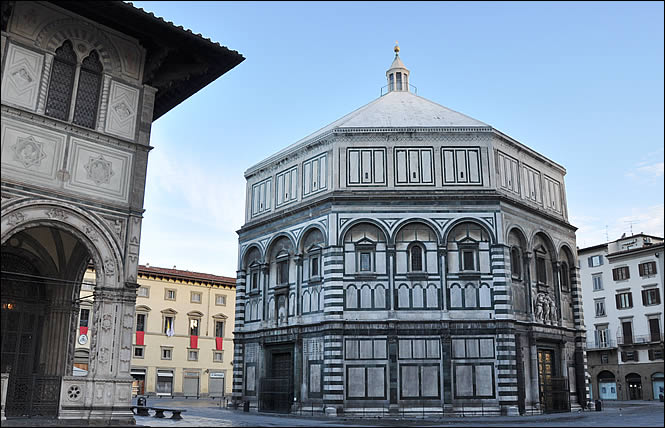
Built over an old Roman house, the Baptistery is an octagon of white and green marble with a pyramidal roof. It began as a cathedral and became a Baptistery in 1128. Its size could accommodate the baptisms, held only once or twice a year.
Exterior visit
South door – the first bronze work carried out in Florence. Andrea Pisano, a Pisan, designed it, and Leonardo d'Avanzo, a Venetian, cast it. The 28 quatrefoil panels illustrate the life of Saint John the Baptist and, at the base, the cardinal virtues. It first faced the cathedral, then was replaced by Ghiberti's Gates of Paradise.
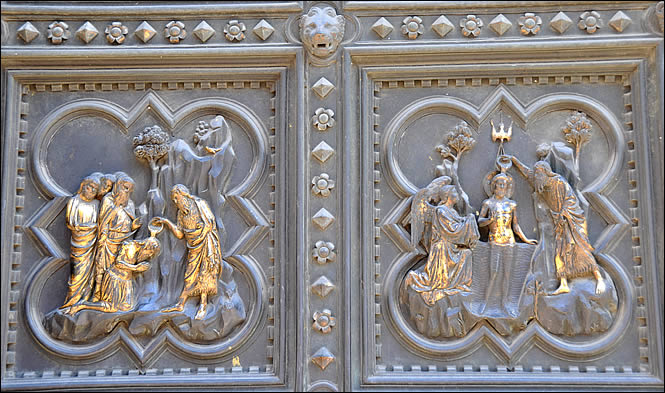
North door – After a competition between Filippo Brunelleschi and Lorenzo Ghiberti, the latter was chosen and worked on it for 20 years.
He keeps the quatrefoil motif of 28 panels, but innovates by introducing perspective into scenes full of figures and naturalistic detail. They depict scenes of Jesus.
The 8 lower panels are devoted to the Evangelists and the Fathers of the Church.
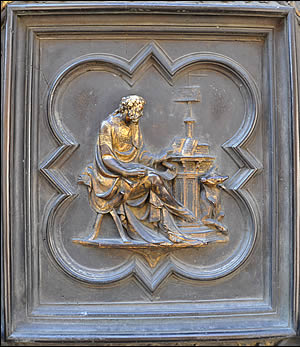
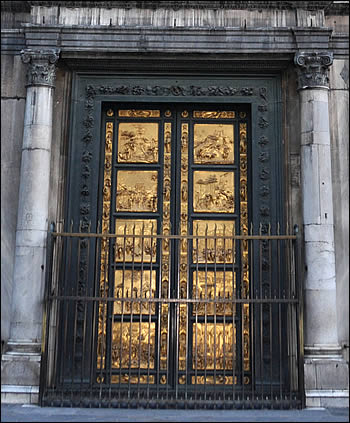
East door – The north door had pleased the drapers' guild, which commissioned Ghiberti to make this one. It was to become the Gates of Paradise, so named by Michelangelo.
Ghiberti innovates by adopting 10 rectangular panels illustrating scenes from the Old Testament, but with several episodes in the same frame.
He applies the laws of optical perspective, reducing the proportions of the images while keeping an extraordinary richness of detail.
The original leaves are in the Opera del Duomo Museum, where you can contemplate them at leisure, away from the crowd clustered in front of the facsimiles.
Interior visit
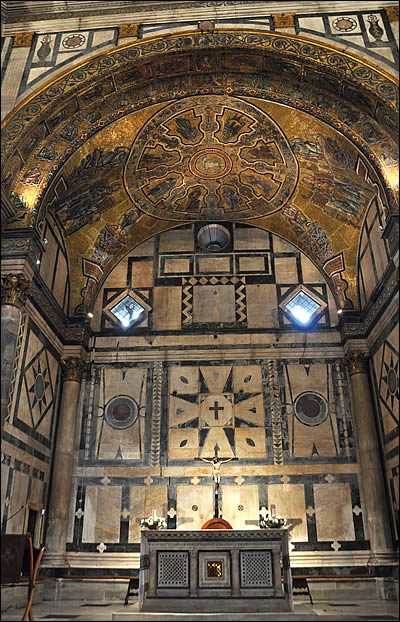
The interior is divided into two levels. The second is a gallery of false windows matching the outer ones, which allows the entrance of light.
The granite columns certainly come from the ancient Roman Capitol. The statue of the gilded bronze tomb is that of Antipope John XXIII, made by Donatello.
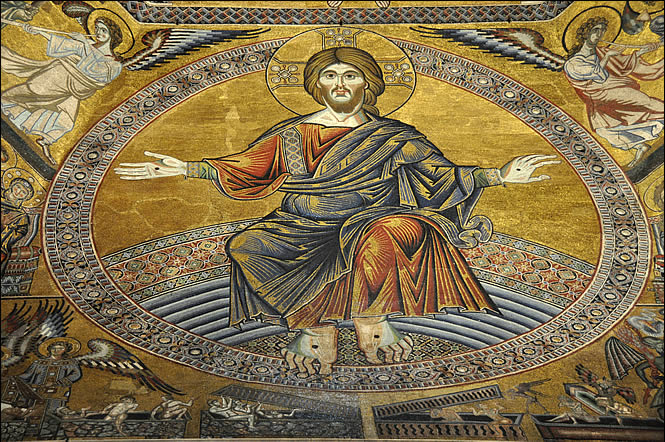
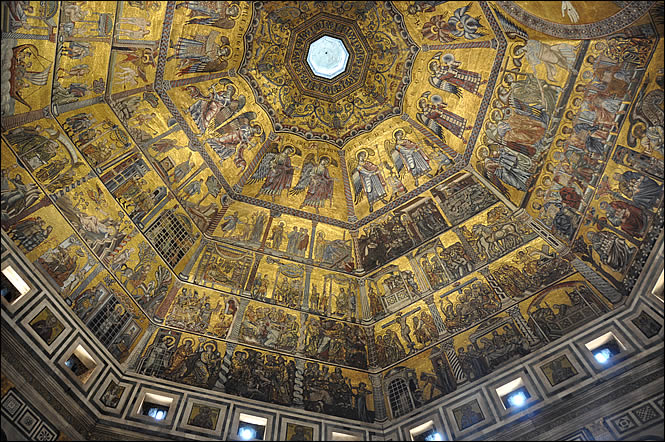
Look up and the richness and complexity of the ceiling mosaics will dazzle you. Byzantine in style, set in concentric circles and divided into panels, they tell episodes from Genesis, from the lives of Jesus and Mary, and of course from the life of Saint John the Baptist. A magnificent Christ, showing his wounds, is surrounded by scenes of the Last Judgment.