The Piazza della Signoria – Square of the Signoria
The Piazza della Signoria is an essential place of passage, the heart of the city, giving access to some of the major monuments of Florence.
You can reach the Piazza della Signoria from the square of the Duomo (cathedral) by walking down Via dei Calzaiuoli.
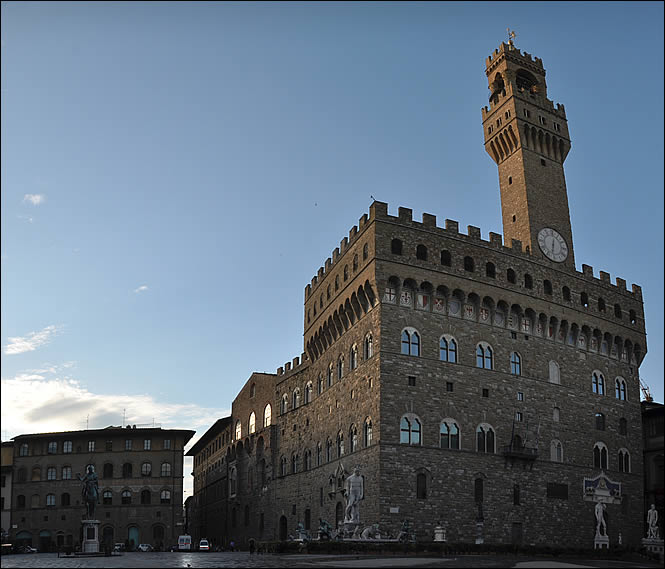
A vast thermal complex under the Emperor Hadrian, then a residential quarter in the Middle Ages, it became the political center of the city with the construction of the palace of the Signoria.
On this square, irregular in shape, you will find:
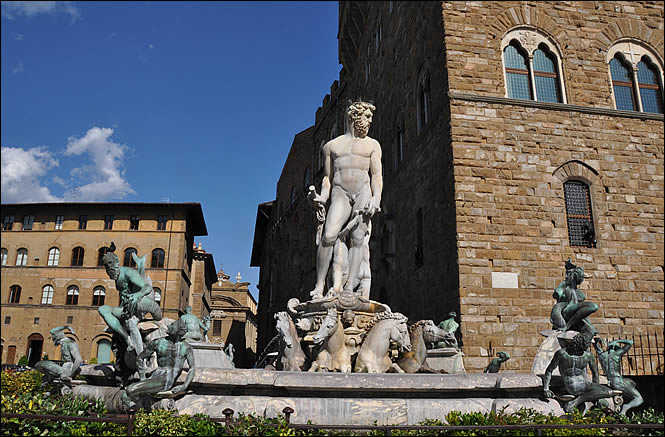
The Fountain of Neptune was built in 1563. The statue of Neptune, extremely heavy, was nicknamed “the big white one” by the Florentines. Neptune has the features of Cosimo I. The bronze naiads and satyrs that adorn the basin rim compensate for the heaviness of the whole.
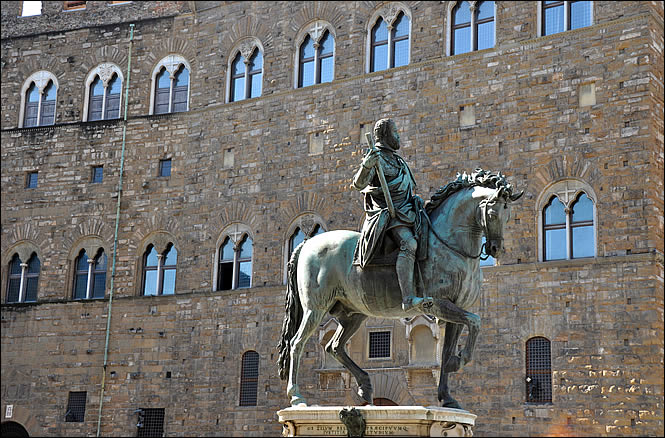
The monumental bronze equestrian statue of the same Cosimo I is the work of Giambologna (Jean of Bologna)
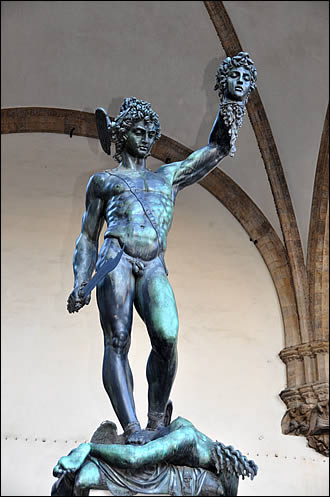
The Loggia dei Lanzi – First called Loggia della Signoria, it was built between 1376 and 1382 to serve as a shelter for the magistrates during ceremonies. When it served as headquarters for the German landsknechts of Cosimo I, it took the name Loggia dei Lanzi. Today it is a true open-air museum of sculptures.
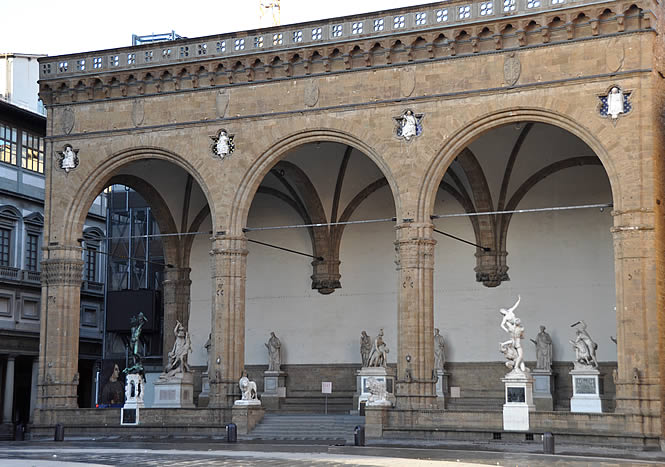
The major work is the Perseus of Benvenuto Cellini, the first bronze work cast in a single piece, which took him 10 years of work. The originals of the statues of the pedestal are at the Bargello Museum.
Another important work is the Abduction of the Sabine Women by Giambologna, carved from a single block of marble. It was originally meant to represent old age, manhood and female beauty.
To find out more about the story of Perseus and Medusa.
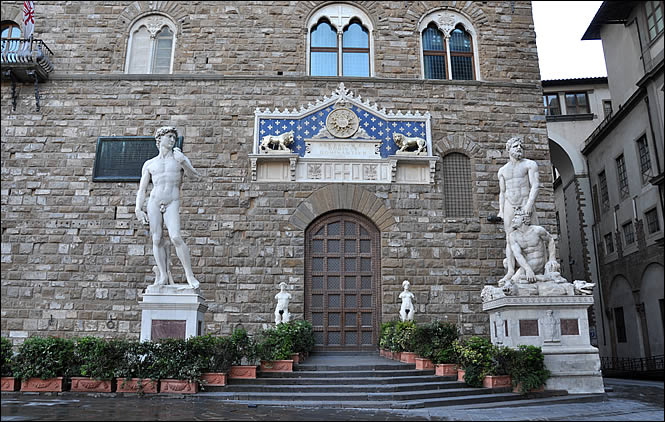
Facade of the Palazzo Vecchio – Masterpieces of sculpture were erected in front of the palace, some of them bearing a strong symbolic meaning (the originals are kept safe in various museums of the city).
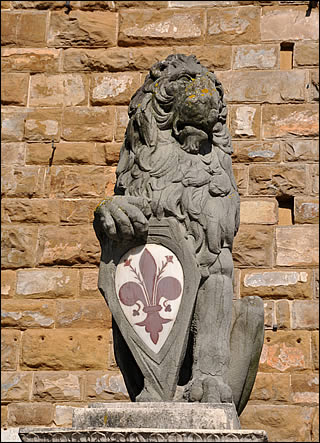
The Marzocco, the heraldic lion created by Donatello, affirms the power of the people.
The group of Judith and Holofernes by the same artist celebrated the fall of the Medici and the establishment of the republic of Savonarola. Michelangelo's David (original at the Galleria dell'Accademia) paid homage to the Florentine people regaining their freedom.
Hercules striking down the giant Cacus commemorated the return of the Medici and their victory over the enemy.