The Church of Santissima Annunziata
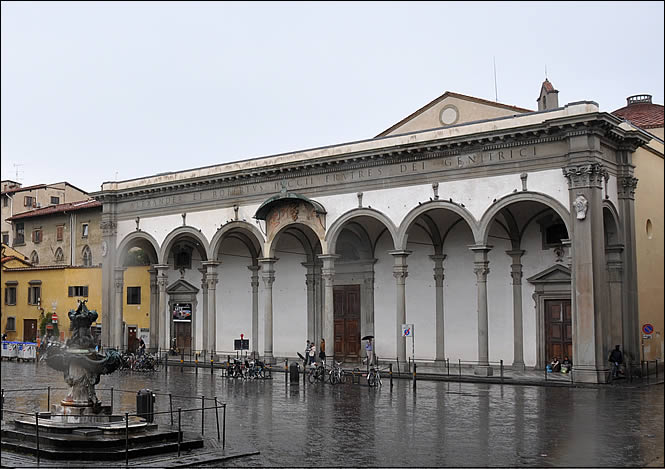
The Church of Santissima Annunziata is located on Piazza Santissima Annunziata, which you can reach from the Duomo (cathedral) by taking Via dei Servi until you come out onto the square at its end.
Address: Piazza Santissima Annunziata
Opening hours: every day, 7:00–12:45 and 16:00–17:00.
Admission: free
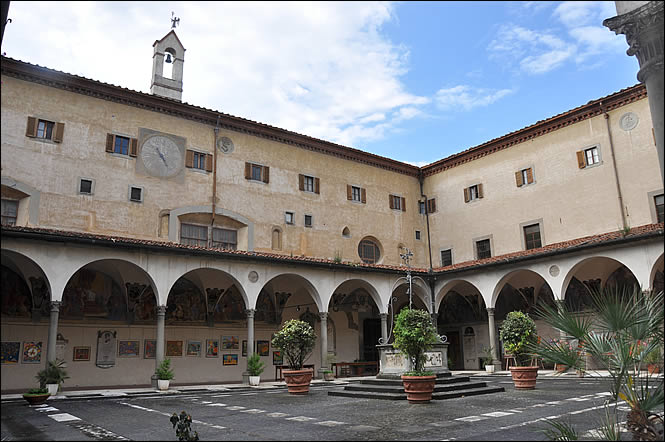
The Religious Order of the Servites of Mary, founded in 1233, had a church built in 1250, then had it enlarged by Michelozzo between 1444 and 1453 to house a religious image of the Virgin. The portico was built between 1559 and 1601.
Chiostro dei Voti – Cloister of the Vows.
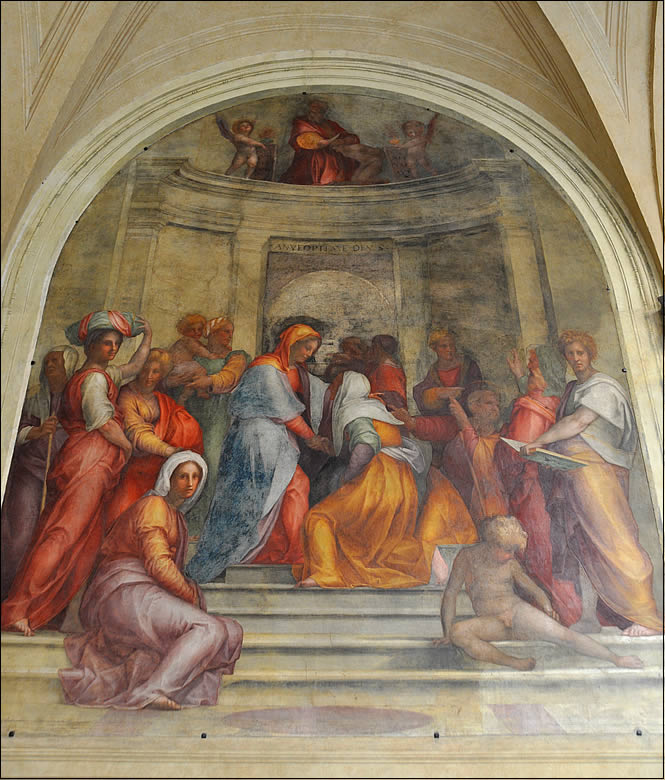
The cloister takes its name from the life-size ex-votos that were hung from the ceiling of the cloister of the vows. As they tended to fall on the faithful, they were removed, but the name cloister of the vows remained! This custom was abolished only in the 18th century.
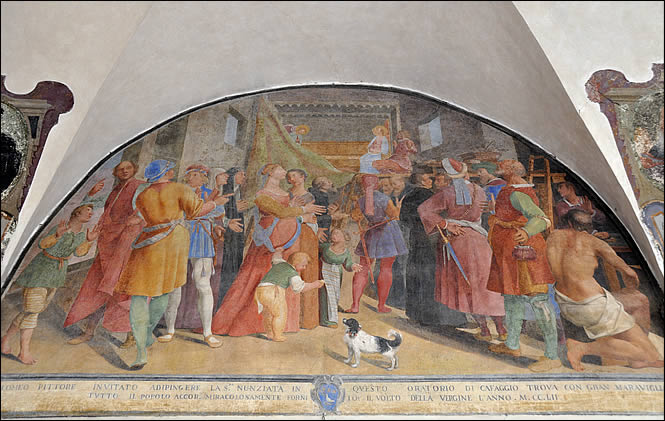
It was decorated by the three greatest painters of the time – Andrea del Sarto, “Nativity of the Virgin” – Pontormo, “Marriage of the Virgin” – Basso Fiorentino, “The Visitation”. Scenes from the life of Filippo Benizi, founder of the Order, were painted by Cosimo Rosselli and Andrea del Sarto.
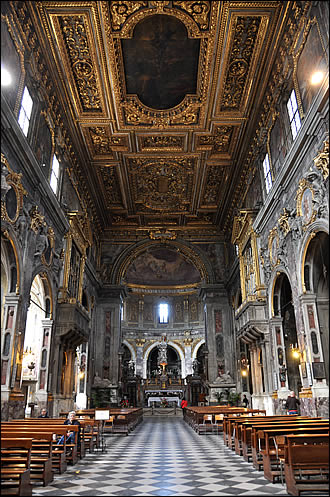
Interior of the church
Michelozzo adopts a plan with a single nave bordered by 17 chapels and a small apse under a dome.
The church presents a rich Baroque decoration: marbles, stucco and gilding.
To the left of the entrance, the tabernacle houses the miraculous image of the Virgin.
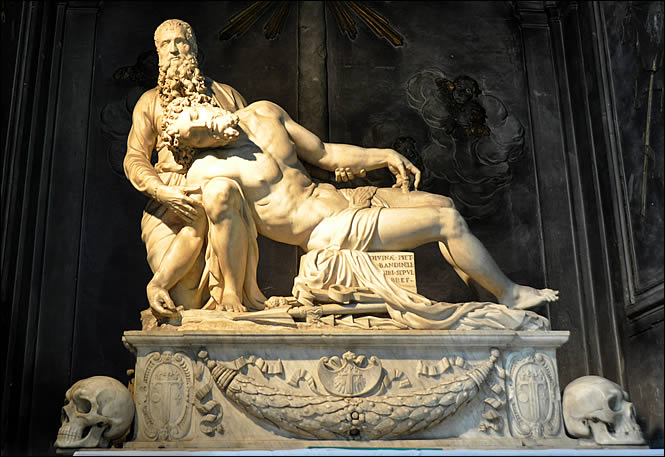
In the chapels, note the Assumption by Perugino and the Pietà carved by Buccio Bandinelli.
The two organs of carved and gilded wood, as well as the coffered ceiling, are remarkable.
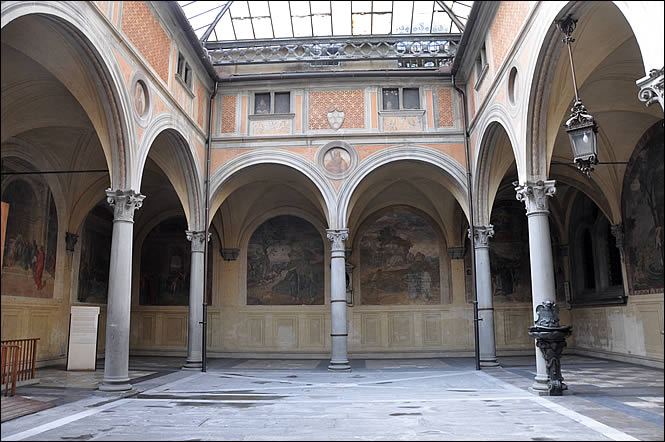
Chiostro dei Morti – Cloister of the Dead
Opening hours: 7:30–12:00 and 16:00–18:30.
The entrance is to the left of the church. It was built in the 15th century to house the burials of the rich donors and of the artists who contributed to the embellishment of the church. Among the frescoes that decorate the arcades, note the “Virgin with the Sack” by Andrea del Sarto. This painting was much admired at the time.