The Galleria degli Uffizi – Uffizi Gallery
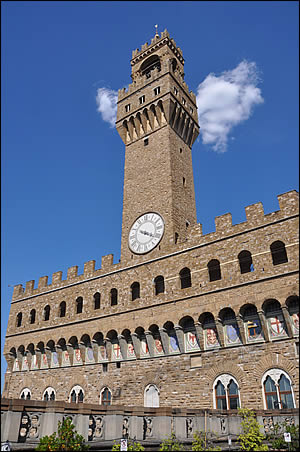
You can reach the Galleria degli Uffizi – Uffizi Gallery from Piazza del Duomo (cathedral) by walking down Via dei Calzaiuoli to the Piazza della Signoria; it is next to the Palazzo Vecchio.
Address: 1 Piazzale degli Uffizi
Opening hours: Tuesday to Sunday, 8:15–18:30. Closed on Monday. Given the crowds, it is strongly recommended to reserve long in advance for a specific day and time.
Admission: €25 (+ €4 reservation fee). Free for those under 18, €2 for ages 18-25 from the European Union. Free entrance on the first Sunday of the month, no reservation possible. Uffizi + Vasari Corridor: €43.

The building was constructed on the orders of Cosimo I to house the offices of his administration. Francesco I de' Medici fitted out the upper floor to house the Medici art collection. It was bequeathed by Anna Maria Luisa, daughter of the last Grand Duke, on condition that it never leave Florence, but it was so rich that it was shared among the various museums of the city, the paintings remaining at the Uffizi and at Palazzo Pitti.
Vasari also built the long corridor that links the Palazzo Vecchio and the Uffizi Gallery to the Palazzo Pitti. Given the size and the richness of the museum, it is illusory to want to visit it in one go. It is wiser to devote the visit essentially to the first rooms dedicated to the paintings of the Florentine Renaissance.
Room 2 – Here you can observe the evolution of painting, which abandons Byzantine hieraticism (Cimabue and Duccio) for perspective and the humanity of the faces (Giotto).

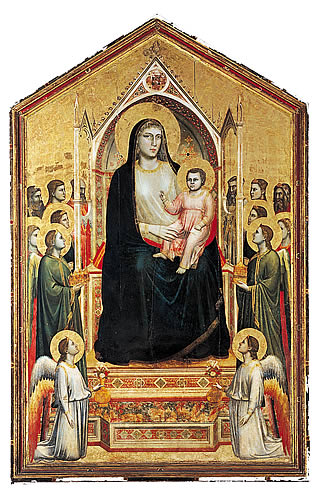
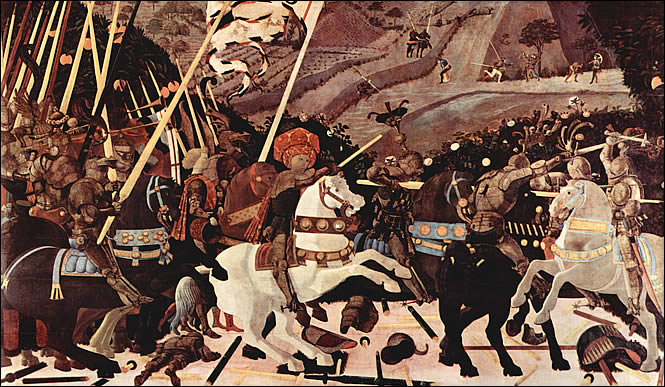
Room 7 – The Battle of San Romano by Paolo Uccello, whose painting, essentially in the depiction of the horses, could be a modern abstract painting.
Room 8 – The double portrait of Federico di Montefeltro and of his wife Battista Sforza shows the emerging influence of Flemish painting.
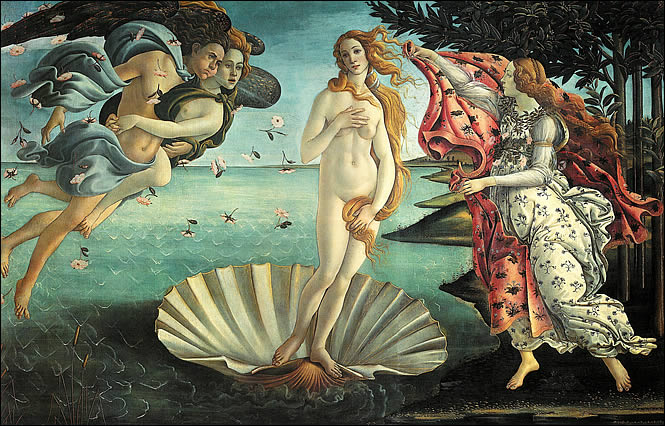
Rooms 10 and 14 – These are the most visited rooms in the museum, because they are devoted to the works of Sandro Botticelli, with the Birth of Venus and Spring, whose symbolic interpretation remains a major subject of discussion. But also linger over the other works displayed in these rooms.
Room 15 – It houses 2 of the rare paintings attributed to Leonardo da Vinci: the Adoration of the Magi, which remained at the drawing stage, and an Annunciation whose attribution to the painter remains controversial.

Room 18 – This small octagonal room allowed Francesco I de' Medici to gather the finest pieces of his collection, including the so-called Medici Venus, which is certainly a Hellenistic copy of an original by one of the most famous Greek sculptors, Praxiteles.
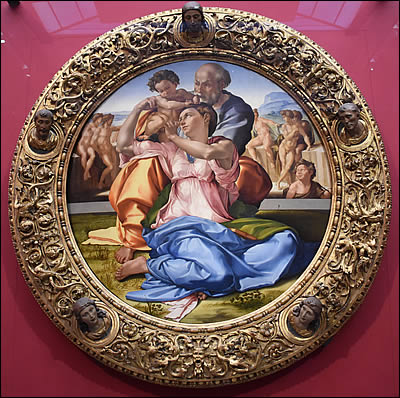
Room 26 – The Virgin with the Goldfinch presents a figure of the Virgin full of grace and gentleness.
Room 28 – The Venus of Urbino by Titian shows a woman sure of her nude beauty, looking the viewer straight in the face.
On the way out, do not forget, on the 1st floor, the room devoted to Caravaggio, with the adolescent Bacchus, in a sensual pose, and the head of Medusa, with its petrifying power, painted on a shield.
After the visit to the museum, continue on to reach the banks of the Arno, where you will have superb views of the Ponte Vecchio and the banks of the river.