The Palazzo Pitti
The Palazzo Pitti is located on Piazza Pitti, which you can reach from the Duomo (cathedral) by taking Via Roma and the streets in its continuation, Via Calimala and Via Por Santa Maria. Cross the Ponte Vecchio to reach Piazza Pitti by taking Via de' Guicciardini.
Address: 1 Piazza Pitti
Opening hours: Tuesday to Sunday, 8:15–18:30. Closed on Monday.
Admission: €16 (+ €3 reservation fee). Palazzo Pitti + Boboli Gardens: €22. 5-day ticket Uffizi + Pitti + Boboli: €40.
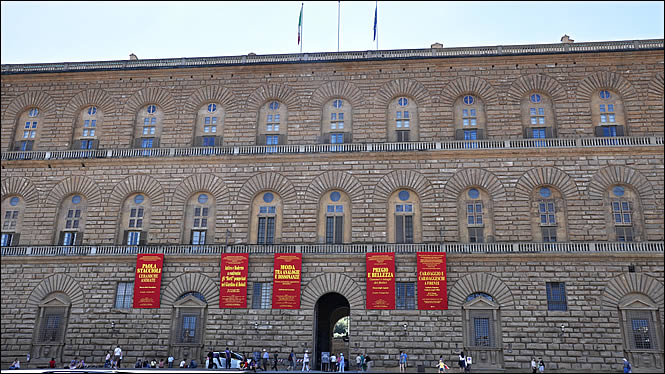
The original building was built from 1457 to 1466 to plans by Brunelleschi for the banker Luca Pitti. Cosimo I bought the palace back in 1569, at the request of his wife Eleonora of Toledo who, in frail health, hoped to find better air in this palace, at the time situated outside the city. The palace was then enlarged according to the plans of Bartolomeo Ammanati. The facade of the palace was further enlarged to 250 m in the 17th century. Palazzo Pitti was thus the residence of the Medici and of the Lorraines.
At the reunification of Italy in 1860, it became the residence of Victor Emmanuel II until 1870. In 1919 the latter donated it to the State. No fewer than 6 museums are located inside the palace as well as in the gardens. It is impossible to visit them all and, moreover, only 3 really deserve a visit.
Palatine Gallery
The collection of paintings occupies about twenty rooms decorated with frescoes and trompe-l'oeil stucco. Some of the works on display are worthy of the Uffizi Gallery but, for lack of space, have remained in situ.
Prometheus Room – tondo of the Virgin and Child by Filippo Lippi
Justice Room – portrait of Tommaso Mosti, by Titian
Ulysses Room – the Madonna of the Impannata by Raphael
Saturn Room – Virgin of the Chair and the Madonna known as that of the Grand Duke, by Raphael
Jupiter Room – by the same Raphael, the Woman with the Veil, known as La Fornarina
Venus Room – the Venus, known as Italic, which is found there, is by the sculptor Canova.

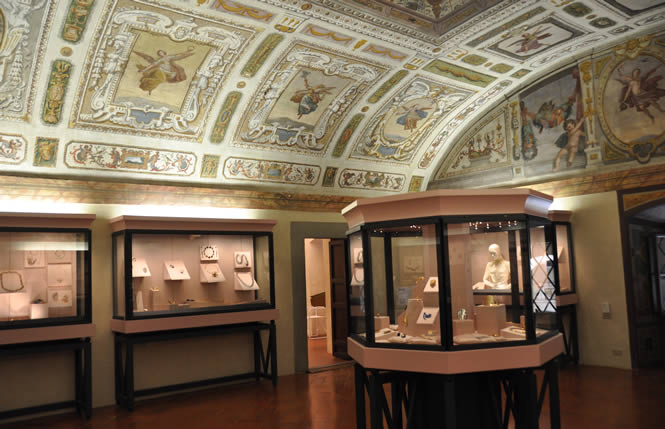
Museum of Silverware
The decoration of the rooms is worth the visit on its own. The paintings on the walls and ceilings are in the illusionistic style (trompe-l'oeil) favored in the 17th century. More than silverware, the museum displays treasures of craft art, such as vases in hard stones, inlaid furniture, cameos, jewels and ivories.
Royal Apartments
Each dynasty left its mark there in rooms richly furnished and decorated, essentially in the neo-Baroque style.
Boboli Gardens
This vast park bears the name of its former owner. It was begun in 1550, reworked over the centuries for the pleasure of the Court, and opened to the public in 1766. It is a magnificent example of an Italian garden.
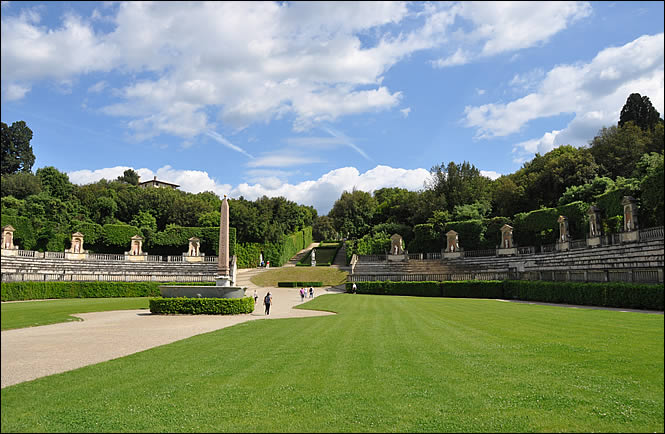
The amphitheater inaugurated in 1637 is decorated with an Egyptian obelisk and Roman statues.
The Neptune basin is just above.
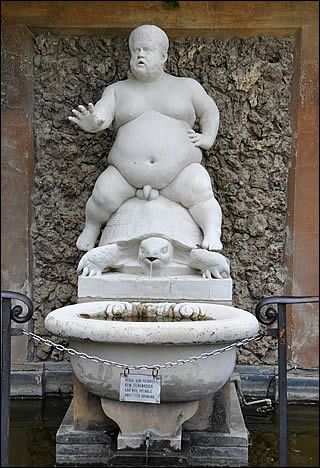
The Fountain of Bacchus represents the dwarf of Cosimo I, seated on a tortoise.
A cypress avenue, or viottolone, lined with sculptures, leads to the Piazzale dell'Isolotto. In the middle of the basin, the Fountain of the Ocean is by Giambologna.
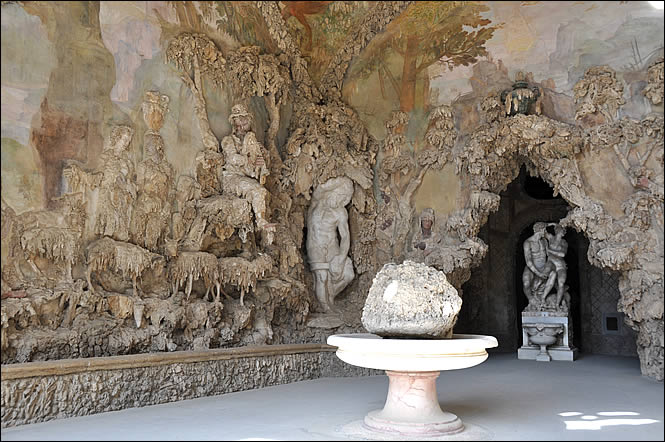
The grotto of Buontalenti
The three rooms display at the entrance the cast of Michelangelo's slaves, and in the other two rooms the Venus by Giambologna and the group of Paris and Helen by Vincenzo Rossi. Frescoes and artificial concretions cover their walls and vaults.